Showing posts with label watches. Show all posts

Tuesday, December 29, 2015

Tissot PRX Triple Pointer Date Moon phase

Today let us talk about a piece I am so glad and ecstatic to own.
It is a Tissot PRX Triple Pointer Date Moon phase  R80 quartz watch , with is a Swiss made chronometer in stainless with gold tone bezel and day date.
I have been finding or trying to get my hands on a vintage moon phase timepiece.
I am glad to announce, I now finally have it.


Though it may not be that old, it is still a 26 year old piece in good working condition.
What makes it all the more special is that, I received confirmation from Tissot on this piece.
At first I was a rather sceptical, as little or close to no info was available online for this particular piece.


There were many PRX models but one with moon phase seemed almost impossible to find any information.


I wished to be able to have more info on this lovely looking piece, to understand its history more.
Unfortunately I really could not find anything online or anywhere else to help ease my queries.

As of now, all I got are little bits and pieces from here and there.
Though I am thankful to have a valuable source of information directly from Tissot.
Their reply to my enquiry gave some basic info on my timepiece.

Below is a response I got from Tissot in Switzerland,

We can inform you that this model PRX is a Tissot production from 1989.
The watch is fitted with a quartz movement,  and is 10 bar (100 meters) water resistant.
The case are made of PVD/steel. This model was also available with gilt, white or black dial.


Though I can only think of one set back, which is that the watch size is a little small but this was the case for timepieces made back in the day up till the 90s.
So unlike the big watch faces we are used to seeing these days or the heavy size, back then it was somewhat petite.


Personally gold coloured moon phase watches looks a tad more classy and gives it a luxurious feel.


To further break down this timepieces below are its specs;
Tissot PRX - Quart 7 jewel Swiss movement.
Dual tone colour combination “18K Gold electro plated and Steel”
White dial with three sub dial indicator column for “Month, Day and Moon phase”.
The second hand sub-dial located at moon phase, while the long needle with a tip resembling a red crescent is a hand pointer date, date version of the circular dial.
Index Strip hours marker.
Solid SS bracelet with a variant of the gold-steel tonnage segment.
Three folding clasp.
WR100m, scratch-resistant glass (sapphire crystal).
36mm diameter crown. 7mm thickness.
Fixed bezel ring pattern formation 12 angle.


If anyone out there has more info on this lovely timepiece, I am all ears!

Monday, September 14, 2015

Rado Voyager

Time to review another vintage piece, this time it is a Rado.

The Voyager has been a Rado model that has been around for a long time.

Strangely enough it is one of those models which has had different variations released along the years yet hardly any concrete info of it can be found online.

I have tried reading about it, to find out more of the story behind this piece but it is like looking for a needle in a haystack.

Just some back info on what shot Rado into “stardom”. Back in 1962, Rado produced the world’s first scratch-proof watch, the DiaStar, since then Rado set an industry standard in scratch proof watches and is still a market leader in scratch proof watches. Rado today still produces fine Swiss luxury timepieces, with multiple styles, having tough, sporty and timeless classic pieces as well.

Today we talk about the Voyager, which sounds somewhat like dive or boat watch or perhaps even to space, in reference to the term, “To voyage”.

As the golden age of space travel as set in the sixties, when Buzz Aldrin and Neil Armstrong set foot on the moon.

Voyager is the name of a model line by Rado, this particular model was around from the late 1960s towards the end of 1980s.

At the beginning, it was just one of many models. It did later it became s.th. like an entrance class model which was marketed for the Fareast markets.

There are countless variations of this piece. All have automatic day/date movements. This model was somewhat like a mass produced model, for the everyday man. There were literally tons of these watches by the end of the 1980s. The Voyager was in my own opinion and this may be true, was the most produced piece in their range.

With the never ending variations, the Voyager was more than just a model but an entire product range of one type of model.
For an everyday watch, it was a practical model and better yet, Swiss made and automatic as well.

For a piece which seems to be selling really well, it was a surprise it ended production.
Though if you think about it, it probably happened due to the Quartz Crisis back in the day.
So what did Rado tell me about my piece, they said

“Yours is from 1982 or later, inside should be an ETA 2836-2 automatic movement with day/date, as the first three digits of the reference number(636.xxxx.x). This movement came 1982. Snap on backs were usual at that time at Rado. From what I can see, it is completely authentic.

The water resistance is always a problem at vintage watches. If you want to have it waterproof, you need new gaskets for the back and crown and a hydrostatic test to be sure. That´s expensive. If you want to wear it regularly, you should have it serviced(cleaning, oiling, adjusting) by a good watchmaker.

Hope this helps. Enjoy it and wear it in health!”
 
I was ecstatic to know that I have yet another original vintage piece in my possession. Plus the last bit from their staff was kind of quirky, wear it in health!

For now this piece is kept in my collection, it is not a piece that I wear frequently as it is too small for my wrist, nonetheless it is a lovely piece that I love admiring.

If only they made the back case transparent or see through, that would have been brilliant.

As this was a widely produced piece, its price is somewhat challenging to discuss. What factors encompasses a Voyager worthy of a mentioning.

It all comes down to the same few factors for every piece I guess? The rarity, condition and current market demand. As we speak, there isn’t really a hype or excitement surrounding vintage Rado pieces except maybe the old DiaStars. Then again in about 10 years, the picture may be totally different?

You may come across many Rados online, especially on eBay. If you think it suits you and the price is right, why not go for it.

This is a nice piece to have for anyone beginning a collection. It isn’t something really fancy or pricy.

I see it as a quintessential piece that perhaps set the tone for automatic watches back in the 1960s, it was an everyday watch. It was somewhat like what our Seikos are today.

Below are some pics of my Rado, it is still in a fairly good condition.

The automatic movement works well and it can run well.


Condition perhaps 7.5-8 out of 10. There are some signs of wear on the face and some visible scratches


Monday, May 25, 2015

Valjoux, who?


One of the first movements that I began to hear a lot when I was reading up on timepieces and how many automatic watches ran was the term “Valjoux”.

It is one of the names I have heard many times and is a movement used in my timepieces, usually for chronograph movements.

Valjoux was a fabled movement maker and was part of the behemoth ASUAG group known today as Swatch Group.

The piece de resistance of the Valjoux movement is none other than the ETA 7750.

How this movement was conceived tells an interesting tale. At that time, Valjoux was a leader in the manual wind chronographs.

It had already produced the manual wind Valjoux 7733 movement which doing amicably well. In the 1970s, they wanted to spearhead a development of a new movement, one which would be reliable and cost effective. This movement is also acclaimed to be the first to have been designed with the aid of a computer back in the seventies.

Sadly it was short lived, it did sell well in the beginning with an estimated of around hundred thousand pieces in 1974. In the following year, production stopped and this movement went bust. At that time, the demand was so low that supplies lasted well into the eighties. Imagine if your Grandad or dad actually bought those pieces when nobody actually wanted them, they would have gotten them at a steal. Today you would be seating on a ‘goldmine’, as the demand for automatic timepieces were somewhat resurrected, so the ETA 7750, somewhat like the phoenix rose from the ashes. (Thankfully the people of ASUAG kept the dies and equipment so they could restart production seamlessly).

Thanks to its ingenious design, this was both durable and economical to produce, along with great support from Swatch Group the 7750 became the most movement in the Swiss automatic chronograph movement. It could be said to be the most successful automatic chronograph movement, perhaps period.

Here are some of the brands out that which use this fantastic movement in the timepieces; Breitling, Cyma, Hamilton, IWC, Mido, Omega & Panerai to name a few.

Wednesday, April 15, 2015

My Bulova Sea King


I recently got my hands on a classy vintage Bulova Sea King, fitted with a Speidel elastic band.

This was a particular model that I have been trying to get my hands on for a while, pictures below.


Prior to getting it, all I knew that it was from the era of the seventies but its story, which once I found out which intrigued me and made me sought after this piece even more.

So when I got it, the first thing I had to do was to get it authenticated from Bulova (something everyone should do once they get any vintage watch).

So Bulova got back to me, confirming my time piece was indeed genuine and from the N1 on the back case confirmed that it was produced in 1971.

Wow! What a marvellous piece of work, it is 44 years old this year and it still works fine.

From what I have gathered, the Sea-King was a water-resistant line from Bulova, it was introduced in 1959 all the way till the seventies. Which means mine was one of the later models.

Some have only the label “SEA KING“, some with the “SEA KING” & Whale logo, while some only had the whale. Which I guess changed over time. This is what is believed as a general consensus.

It seemed to be something that was not questioned by most, who took it as a gradual change in the aesthetic feature of the watch. Apparently there is a meaning to the whale on the face.

Some Bulova experts, have stated that the whale actually appeared around the 1966 to 67 but it did not necessarily meant it was a ‘SEA KING’ model. The whale actually meant it was waterproof.

If you dig further, there seem to be a link or a tribute to the Whalers of Sag Harbour, which was the home of the Bulova watch case factory (at Sag Harbour).

We only know this to be hearsay, its seems plausible thought. The whale logo came out around 1966, which coincidentally marked the 100 year anniversary of a Whaling Festival of Sag Harbour which was where the Bulova factory was situated as well. This seems the most promising explanation which links the two together.

For those of you who would like to delve deeper, have a whale of a time reading more into the story here : http://www.mybulova.com/forums/bulova-sea-king-whale

I guess the story of the watch actually compelled my to want to own one as well, as it has an interesting story shrouded in mystery.

I am a fan of many of the old Bulova timepieces, another highly sought after piece for myself would be the Bulova Accutron.

To me, the Bulova timepieces of old which were Swiss made are really lovely and has that ‘real deal’ feel about it. What I mean is that it built watches that were made to last.

Though the current modern day do Bulovas look nice and are now mostly made in Japan, I am just a little unsure if it would stand the test of time, like the stalwart Sea King that is still going strong 44 years on.  Asthetically a watch may look exquistie but there more than meets the eye. To someone who love timepieces, the movent and detailing matter much as well.

Though I would think it would be time I sent it for some general servicing and cleaning.

As to why it is now mostly manufacuted in Japan, here is a short history.

Back in the day, Bulova was a major force in the watch industry. Bulova timepieces were mechanical movemnts that were well made, deisgned and relialbe (just look at the one I got, still ticking away). Bulova had a great share of the electronic watch market with their tuning fork Accutron. By the mid seventies, there was an eruption of quartz watches in the market, Bulova was suddenly hit and somehow seemed to dwindled down from then. It has lost its marketshare to the influx of Japanese watches, names the qaurtz watches. They were sold to the Loewe Corporation and then finally sold of to Citizen of Japan in 2007.
 
So the Sea King is surely a piece to be etched in Bulova history.

Sunday, January 25, 2015

Hugo Boss Timepieces


So I recently received a Hugo Boss Timepiece as a gift. I have been scratching my head to figure out where exactly the watch is made in?

Nowhere on the box, manual guide or watch does it state. I have not tried opening the backing of the watch, as I do not have the proper tools nor expertise for it.

I have a few pictures below of the watch I received, let’s see if any ne out there can help me out on this.


I have been doing some reading online, what I found out is that Hugo Boss has licensing agreements with Movado to help produce timepieces for them. This is the background except from Wikipedia, “ The brand's parent company, Movado Group, Inc., was founded in Switzerland in 1983 by Cuban-born Gedalio Grinberg. The company designs, manufactures, and distributes the following brands of watches in addition to its own: Ebel , Concord, ESQ Movado, Coach, Hugo Boss, Lacoste, Juicy Couture and Tommy Hilfiger.

Of all the above brands, I only know Concord watches to fetch a hefty price tag. None of the other brands, like Ebel the principal brand of Movado have I really heard much of. Prior to this, I must admit I did think of Concord watches to be altogether an independent brand. I can’t seem to find a reference, link or connection on Concord’s website www.concord.ch tying it up with Movado. I guess this could be a marketing strategy, to make it seem like a totally independent brand from Movado. As who would want to spend 50 grand on a timepiece (Yes, I personally know someone who bought a Concord timepiece for 57Grand) to having later find out, that the watch they pay such dough for is linked to a company making “mediocre” timepieces for Fashion Label, who are finding secondary means to generate more revenue. On the other hand, some people may not even bother about such trivial things. Thought I can see myself being one of the lesser few who may be.  After some searching I did find it stated on Mavado’s website; http://www.movadogroup.com/brands/concord.cfm

While scavenging through some forums, some signs points to perhaps the Hugo Boss watch I received could have possibly be made and assembled in China. Which would be no surprise for me, but I don’t seem to be able to find any solid evidence for it.

Movado may be a Swiss company but I am pretty sure the watches under their account from Coach, Hugo Boss, Lacoste, Juicy Couture and Tommy Hilfiger are surely not Swiss made as it would surely add additional ‘zeros’ or well at least hundreds to the price tag to be modest. Also the most clearest indication would be to slap on the ‘Swiss made’ tag on the dial, which who wouldn’t right? On the other hand, some people in forums said they may actually be made in  Germany. Though at this point of time, I have no actual evidence of this. Having read several forums, many other people seem as puzzled as myself.

So this still have left me scratching my head. Never thought finding something like this out could be so tedious. It all seems a little jiggery-pokery.

Wednesday, January 7, 2015

What does a timepiece mean to you?


What does having a timepiece mean? Does a timepiece define a man or a woman?

Recently I have read some articles on how people have been discussing on how a timepiece reflects a person’s character or attitude.

Which to a varying degree may seem true but then again some people have eccentric taste but it may not be a reflection of themselves.

So I just wanted to give my 2 cents worth.

Here goes.

They sometimes say you can differentiate a “ruffian” from a  gentlemen by the watch he wears.

How sophisticated or uncultivated a man may be, is sometimes measured by his timepiece, how true this is I do not know.

Though it has proved many times more than less, to be true. Genuine gentlemen, men of chivalry do more often than not have very lovely timepieces accompanying them on their wrist. Most of these men have timepieces that are adored by many. Classic, vintage, subtle and never too loud and flashy. It has the right balance of all things fine.

You see many aristocrats  adorning fine timepieces, many a times a Swiss timepiece. On the other hand, there are men with money and no appreciation for the finer things in life. Having money, they may be able to buy many beautiful and expensive things in life, but that does not simply mean they may understand it or appreciate it. Thus unfortunately, some men end up buying really flashy expensive timepieces without having a deep appreciation or understanding of what they own. Many end up ”bling-ing” up their timepieces. Like having the dial covered in diamonds or a full diamond bezel. This many a times, diminishes the class of a timepiece in my opinion. It’s like looking at a Da Vinci painting. It is a masterpiece the way it is. You would not add anything to it. So why add diamonds all over an already  beautiful timepiece.

Do not get me wrong there are many amazing jewellery inspired timepieces that have left my jaw hanging. Like those of Cartier, which has such class and perfection. It has that je ne sais quoi about it that I cannot explain, which is oh so alluring. Not forgetting many early timepieces by Vacheron Constantin which were actually made with dual purposes to act as a jewellery piece and to tell them time as well, like the one below.


MÉTIERS D'ART LADY KALLA FLAME

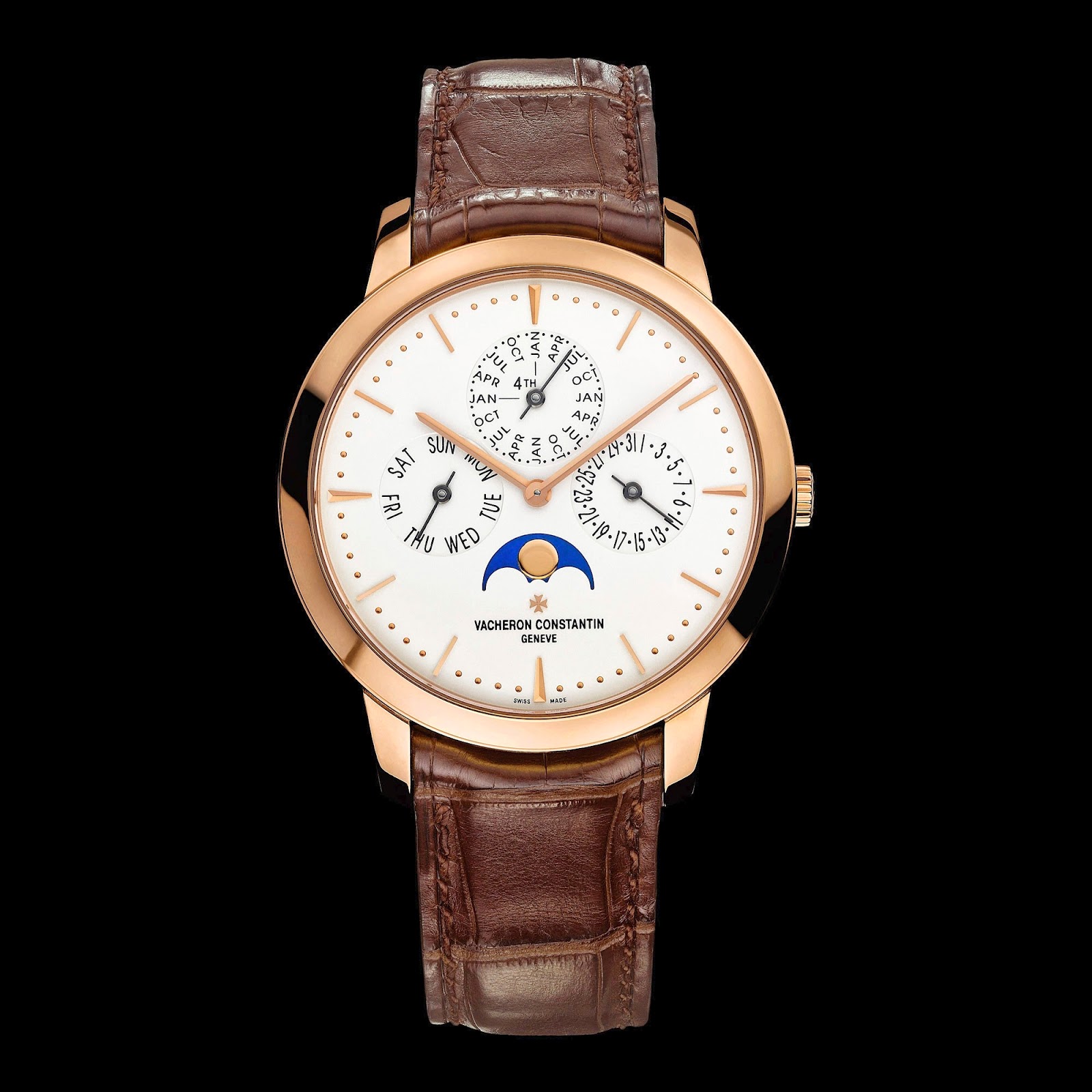
So yes back to the timepieces, I have a deep appreciation for each one, how unique or loud it may be. I have been a really huge fan of classic and vintage designs. I really find "complicated" timepieces such a joy to behold. To me it is like beloved the work of a maestro, just like how a painting is admired. All the complications packed into such a limited amount of space makes it all the more extraordinary. Below is one of these pieces which are among my favourites


                                                                                                        PATRIMONY PERPETUAL CALENDAR


Though for some reason, I recently laid eyes on a limited edition watch from LIP, and am somehow drawn to it. It is the MACH 1871 to be more specific,  this is a really unique timepiece. It is bold, loud and everything I am not usually drawn to. I guess the French have a way to make unconventional seem elegant about it. See the picture below and you will understand what I mean.
                                                                                  
                                                                                         MACH 1871
So when you wear a timepiece on your wrist you are showcasing an art form meant for enjoyment both for your eyes and mine. If at the right place at the right time, someone who understands what you mean may even start a conversation, or pay you a compliment on your timepiece. I have read of stories of how wearing the right timepiece has helped in many situations or even opened up business opportunities for some.
 
So keep on rocking your wrists with any timepiece. Who's to know, it may lead to an open door for you? I am still awaiting my coveted timepiece to adorn, slowly but surely I will work my way up to it.
The saying goes, the pen is mightier than the sword but I beg to differ.
The timepiece is mightier than both, sword and pen. As history itself proves it. We see accounts of famous historical figures having owned fascinating timepieces be it a pocket watch or wrist watch. The likes Napoleon Bonaparte and Pope Pius XI have adorned a Vacheron Constantin just to name a few.
I find it rather remarkable that most famous historical figures are associated with timepieces that they had in their possession. It seems that their timepieces has indeed stood the test of time (pun intended).
 
So with that, The pen may be mightier than the sword, but the timepiece conquers all.

Tuesday, January 6, 2015

So what is Quartz & Mechanical


I have been absorbed into the very fascinating world of Watches.

I can’t seem to have enough of them, these fine timepieces have gotten the better of me.

This year I have been reading up countless pages online on different watch movements and history of certain timepieces. Expanded my knowledge of many more amazing new and vintage brands.

Learning the differences between functions and movements.

I still have so much more to learn and grasp.

The art of watch making is amazing, all the unbelievable kinds of functions in every time piece, each in its own style and each brand having it’s open particular speciality.

Firstly a movement is something like what runs the watch like an engine or heart of the timepiece ( in my own words).

The most basic being either quartz or mechanic.

A quartz movement is an electronic movement. It is called a quartz movement, because a small quartz crystal is integrated into the electronics. This is done as every timekeeping devices needs something constant in which it can measure time against. When current is run through a quartz crystal it will oscillate almost perfectly at a constant frequency. Hence the reason why quartz watches have such an amazing accuracy. The better the quartz, the more accurate time keeping will be to within few seconds a year.

Most quartz watches run on a battery, which can usually last from 2 to 5 years before a replacement is needed. The more basic the watch the longer the battery may last. More complicated movements which may include a compass or stopwatch may result in a shorter battery life.

Mechanical watches seems like a thing of the past in our current day and age. Yet it is an important movement as it may have led to more modern movements. So there may be self-winding or manual winding mechanical or automatic. The technology used in mechnical watches may somewhat be centuries old. This movement is powered by springs that turn gears in which is a regulating mechanism, eventually the hands. Mechanical movements have a range of 50 to 300 parts. This usually depends on the movement. If properly maintained and kept in good care, whose to know how long it may last?

From reading maybe articles, it is said that the jewels used in the movements is a reason that mechanical watches have such longevity.

The most common form of mechanical watches are the automatic. Automatic watches have a rotor that spins on the back of the movement. This turns a gear which winds the main spring in turn working the watch.

Mechanical watches may start simply by keeping time, showing hours, date and stopwatch features to complications such as perpetual calendars alarms and minute repeaters. Such complicated mechanical watches are known to fetch high to exorbitant prices. Watches such as Vacheron Constantin or Philippe Patek.

Just like changing the battery on a quartz watch, for mechanical watches it requires cleaning and maintenance after every few years. For this cost it varies from hundred dollars onwards.

As I have mentioned, I am new and this info is what I have amassed from reading articles and posts online and in books. So I may be wrong in some parts, and I am open to learning more if anyone can help me improve.

Thanks for reading and for anyone new to this hope you have learnt something.


Cheers.

Friday, January 2, 2015

Introduction to my obsession

It was back in 2011, when I stumbled upon an exhibit in our local Museum in Singapore on fine timepieces. It was an exhibit by Vacheron Constantin and my god were the timepieces amazing and nothing short of exquisite. To cut the story short, since then I have been hooked.

The history, the art, the finesse, the immaculate work, the scrutinising detailing, everything I saw was simpliy mind blowing.

Below is the link of some of the gorgeous timepieces I laid eyes on;


I was privileged and blessed enough to be invited to an exclusive closing event by Vacheron Consantin including a private tour for the exhibit and a closing party in Fort Canning Hotel in 2011. The highlight was the night was a private tour with a watch experts who expounded further on each timepiece as we walked past them. Each piece telling a marvellous and intriguing story. From being a famous heirlooms of monarchs and to personal pieces belonging to notable historians. At that very moment, like a fish swimming towards the bait, I was hooked.

Since then, I have been to number of other exhibits available locally. I am constantly trying to grow my understanding on timepieces and chronology. I am still a baby, weaning and am slowly growing my capacity and intellect on the meanings of all the different kinds of watches and movements.

Back then I was a student, having just started working I hope to start a small watch collection and hope to grow it to a decent collection someday.

Who says it's wrong to dream? As I told my wife, it would be a dream to work for any timepiece company out there, to expand my knowledge and grow my fascination and love for timepieces.

Having seen, read and learnt of so many brands around the world, each great and momentous in its own right. I dream to be a proud owner of a Vacheron Constantin timepiece one day, to me it is the Crème de la crème.

Who knows, from my little humble blog, an opportunity may come along. Allowing me to work with timepieces as a living. What a life!


So let's get started! I look forward to more posts and use this page as a means for me to learn and share.