Showing posts with label stopwatch. Show all posts

Wednesday, June 3, 2015

Seiko Criteria, Chronograph.

Let’s talk about Seiko today. The game changer, the Japanese power house!

Seiko almost wiped off the existence of automatic watches back in the day. Aptly known as the ‘Quartz Crisis’ in Switzerland and the ‘Quartz Revolution’ outside of Switzerland. The invention of the Seiko Quartz watch changed watch history forever in terms of Horology. The world’s first quartz watch was released by Seiko, call the Quartz ASTRON.

From then on Seiko has never looked back, developing so many other interesting timepieces like the Seiko Kinetic as well.

Today I won’t go into deal on how fantastic Seiko has been over the years.

I am going to talk about a Seiko I own. So this is my first ever Seiko. A Seiko is somewhat a watch for the everyday man and here in Singapore I see a Seiko or Citizen on the wrist on the average man on the street. Well growing up no one in my family really cared much about timepieces and we had really basic watches on our wrist, just to tell the time. The first ever watch I had as a kid was probably a digital Casio watch.

Well since then, I have come a long way. I have had a deep interest in Horology and in the arts of fine watch making. Though Seiko may not fall into the category  of fine watch making. It definitely deserves a place in Horology history for their contributions to the Horological world.

The watch at hand is the limited edition Seiko Criteria SNDG13P1, number 2041 out of 3600.


Below are the specifications of this timepiece


Quartz movement.
Calibre: 7T92.
Black ion-plated stainless steel case.
Blue ion-plated stainless steel unidirectional rotating bezel and inner ring with tachymeter.
Black ion-plated stainless steel bracelet.
Three-fold clasp with push button release.
Screw case back.
Blue dial with luminous hands and indexes.
Date calendar display at 4 o'clock position. 1/20 second chronograph, up to 12 hours.
Sapphire crystal glass.
Water resistant to 100 meters.
 

Visually the piece looks amazing, I feel the colours of the dial and the bezel match together very well. That metallic shine makes this piece stand out more as compare to the other similar models which are not limited edition. The Black ion-plated steel bracelet gives sort of a gun metal finish colour which once again I find visually stunning. So aesthetically the colours are nice and vivid. There is a nice extra touch with the blue dial having luminous hands and indexes.

For the technical side, the Calibre 7T92 has the sub dial at the 6 o’clock has the hour and minute hands that track the chronograph elapsed time up to twelve hours. The sub dial at the 12 o’clock is the 1/20 second indicator. The interesting this is that the second hand does not measure the time but is used to measure the second for the chronograph movement. Where else, the sub dial at the 9 o’clock is actually the one which shows the seconds for the time.

On the bezel there are Arabic markings and seconds hands in multiple of fives.

Inside on the dial there are more markings for the Tachymeter function.

This is a nice weighty piece, as for me I like big heavy pieces that has a little more weight on the wrist.

The steel bracelet does surely add more weight on this piece. Making it a little bulky and stand out slightly more.

So overall this is a nice piece with great chronograph and
 tachymeter functions.

With stark colours to make it shine, it has a nice sporty feel like an aviator or motor GP watch.

This can be worn both with your suit to work or for a game of golf.

Take a look and judge for yourself.


Wednesday, April 15, 2015

Deconstructing the Tachymeter


Alright today let’s talk about the tachymeter complication.

A tachymeter gives a timepiece a sporty look, something that when you look you associate with sports such as racing or for the military.

It add lovely contrasts to many timepieces, making the overall look more sophisticated.

Though a lovely complication which adds dimension to your timepiece, it may be totally foreign or alien to some on how to use it.

Like seen from the below picture, my Seiko Criteria SNDG13P1 (which I will write about soon)


Some people go out having their timepiece without ever using the tachymeter function.

To a major share of watch uses, they may simply purchase a timepiece with the tachymeter function due to the fact that it add aesthetic value to their timepiece.

So let us cover how a Tachymeter actually works.

A tachymeter scale is a scale sometimes inscribed around the rim of an analogue watch. Usually with Arabic marking around the dial as well.
 

This function is used to either measure a distance based on speed or speed based on travel time. The markings have spaces in between them on the tachymeter dial are consequently proportional to 1/t where ‘t’ is the elapsed time.

A tachymeter’s performed function is independent of the unit of distance be it kilometres, miles or any other only as long as the unit of measure is equivalent for all calculations. In essence, a tachymeter is a way or means of converting ‘elapsed time in seconds per unit to units per hour’.

To get a little mathematical below is some info on calculations to work it out;

“To use a tachymeter function to measure speed, start the chronograph at a starting marker of a known distance. At the next position, the point on the scale adjacent to the second hand indicates the speed of travel between the 2. The typical scale on a timepiece converts between the number of seconds it takes for an event to happen and the number of times that event with occur in a hour. The formula to create this

kind of tachymeter scale is     T = 3600/t   

Where ‘T’ is the tachymeter scale value and ‘t’ is the time in seconds that it takes for the event to occur and ‘3600’ is the number of seconds in an hour.

So lets work out an example, if it takes 35 seconds to travel 1 kilometre then the average speed would be 103KM per hour. Do take note that the tachymeter scale only calculates the average speed.”

So with that, we are more or less through with the practical of a tachymeter.

Lastly, just some history, the first rotating bezel tachymeter was introduced by Heuer, now Tag Heuer which was back in 1958.

By the late sixties chronograph timepieces where sky rocketing, demand grew invariably and watch manufacturers around the globe were contesting to opportunities to patent automatic versions and wanted exclusive rights. It has to be known that without the chronograph the tachymeter complication would have no place as well.

Let me share a little fascinating history on some very lovely chronograph movements which came into being.

Around that time Breitling, Heuer and Hamilton partnered up with Dubois Depraz to develop the first ever self-winding chronograph. It was a clandestine affair in which only a handful of professionals involved on a need to know basis. This great development was unveiled in Geneva and New York on 3rd of March 1969. Called the Chrono-matic, the Calibre 11 movement would wind itself using an off centre micro rotor.

Soon enough, Zenith had produced the El Primero (Which might I add, is absolutely stunning!) which used a central mounted full rotor and was capable of measuring time to one tenth of a second.  Seiko the Japanese giants also released their automatic chronograph called the 6139 Auto-Chrono.

Out doing themselves once again, Seiko created the world’s first quartz watch, a giant breakthrough in Horological history, thanks to this hefty invention it somewhat marked an end and seemingly rendered chronographs virtually obsolete with the Seiko Quartz Astron 35SQ.

Back to our modern day and age, the chronograph is making a comeback and is appreciated by many once again.

With many lovely pieces from Tag, Seiko, Breitling, Hamilton and so on.

Though some of us may not entirely know how it functions or its practicality, it may serve as an aesthetic feature. Nonetheless the tachymeter is a lovely complication, you will never know when it may come in handy.


Friday, January 16, 2015

What is a Chronograph?


So have you ever asked this question, what exactly is a Chronograph watch?

It may seem like a really absurd question to most people who know a thing or two about watches.

But guess what, I have been asked this question before. So why not explain it?

Firstly, before I carry on, yes I do know there are a ton of websites and books out there that already explain or give you the answer you are looking for with regards to “what is chronograph or tachymeter” and so on. Well yes it is true, there are so why exactly am I writing then?

I am doing this to help myself further understand and learn from what already little or much I may know. As you can never know too much.

Similarly I do live by the principle of, "We learn new things everyday". So writing helps me to learn and express. 

Carrying on, so the most basic kind of watches out there are the ones that only show you the time. It has numerals (most of the time, some omit numerals altogether) and 3 hands (Hour, Minute and Second) like shown below.


Some basic watches do have other patterns or designs, like the Nomos Tangente, which right now is one of my favourite pieces out there. This particular model has a separate second hand counter. ( On a side note, this is such a lovely and classic piece that I would really like to own, soon)

  (TAKEN FROM HTTP://WWW.nomos-store.com/out/pictures/master/product/1/tangente_font(1).png)

Before I carry on, we owe it all to Monsieur Louis Moinet, the inventor of Chronograph. So the back story was that in those days the "aristocrats" were interested in the cosmos, so this invention was actually used for tracking astronomical objects.

In essence, chronograph watch is basically a watch that has a stopwatch function added into it. Chronograph watches can be either automatic or quartz and feature various complications at once and have several sub dials to read off the measurements. The most basic chronograph has a separate or independent sweep second hand which can start and stop, and return to zero. There can be up to four dials on the face to indicate hour, minute, seconds and 24 hour indicator(some dials show even up to a tenth of a second), like the  Eberhard And Co. Chrono 4 Grande Taille 31052.1 shown below. 

                 (TAKEN FROM HTTP://azfinetime.wordpress.com/2013/02/09/eberhard-and-co-chrono-4-grande-taille-31052-1/)


Majority of the chronograph's  features works by pushing a start button. Usually most of the start buttons are placed at the Two O Clock position to get the timer moving to record time and by pressing the same button to stop the time recording and returning to zero by pressing it over.

Each individual function of the chronograph is independent of each other. What this means is that your timepiece can tell the time and function as a stop watch concurrently.

Not to be confused, Chronograph is known as a complication of a timepiece and not its movement (of the watch).


Just to add in some technical stuff, there are 2 kinds of chronographs the automatic and digital. Difference being, automatic chronograph depends only on kinetic energy as a source of its power. The digital on the other hand works very much like a common hand help stopwatch and is run by batteries.


Wednesday, January 7, 2015

What does a timepiece mean to you?


What does having a timepiece mean? Does a timepiece define a man or a woman?

Recently I have read some articles on how people have been discussing on how a timepiece reflects a person’s character or attitude.

Which to a varying degree may seem true but then again some people have eccentric taste but it may not be a reflection of themselves.

So I just wanted to give my 2 cents worth.

Here goes.

They sometimes say you can differentiate a “ruffian” from a  gentlemen by the watch he wears.

How sophisticated or uncultivated a man may be, is sometimes measured by his timepiece, how true this is I do not know.

Though it has proved many times more than less, to be true. Genuine gentlemen, men of chivalry do more often than not have very lovely timepieces accompanying them on their wrist. Most of these men have timepieces that are adored by many. Classic, vintage, subtle and never too loud and flashy. It has the right balance of all things fine.

You see many aristocrats  adorning fine timepieces, many a times a Swiss timepiece. On the other hand, there are men with money and no appreciation for the finer things in life. Having money, they may be able to buy many beautiful and expensive things in life, but that does not simply mean they may understand it or appreciate it. Thus unfortunately, some men end up buying really flashy expensive timepieces without having a deep appreciation or understanding of what they own. Many end up ”bling-ing” up their timepieces. Like having the dial covered in diamonds or a full diamond bezel. This many a times, diminishes the class of a timepiece in my opinion. It’s like looking at a Da Vinci painting. It is a masterpiece the way it is. You would not add anything to it. So why add diamonds all over an already  beautiful timepiece.

Do not get me wrong there are many amazing jewellery inspired timepieces that have left my jaw hanging. Like those of Cartier, which has such class and perfection. It has that je ne sais quoi about it that I cannot explain, which is oh so alluring. Not forgetting many early timepieces by Vacheron Constantin which were actually made with dual purposes to act as a jewellery piece and to tell them time as well, like the one below.


MÉTIERS D'ART LADY KALLA FLAME

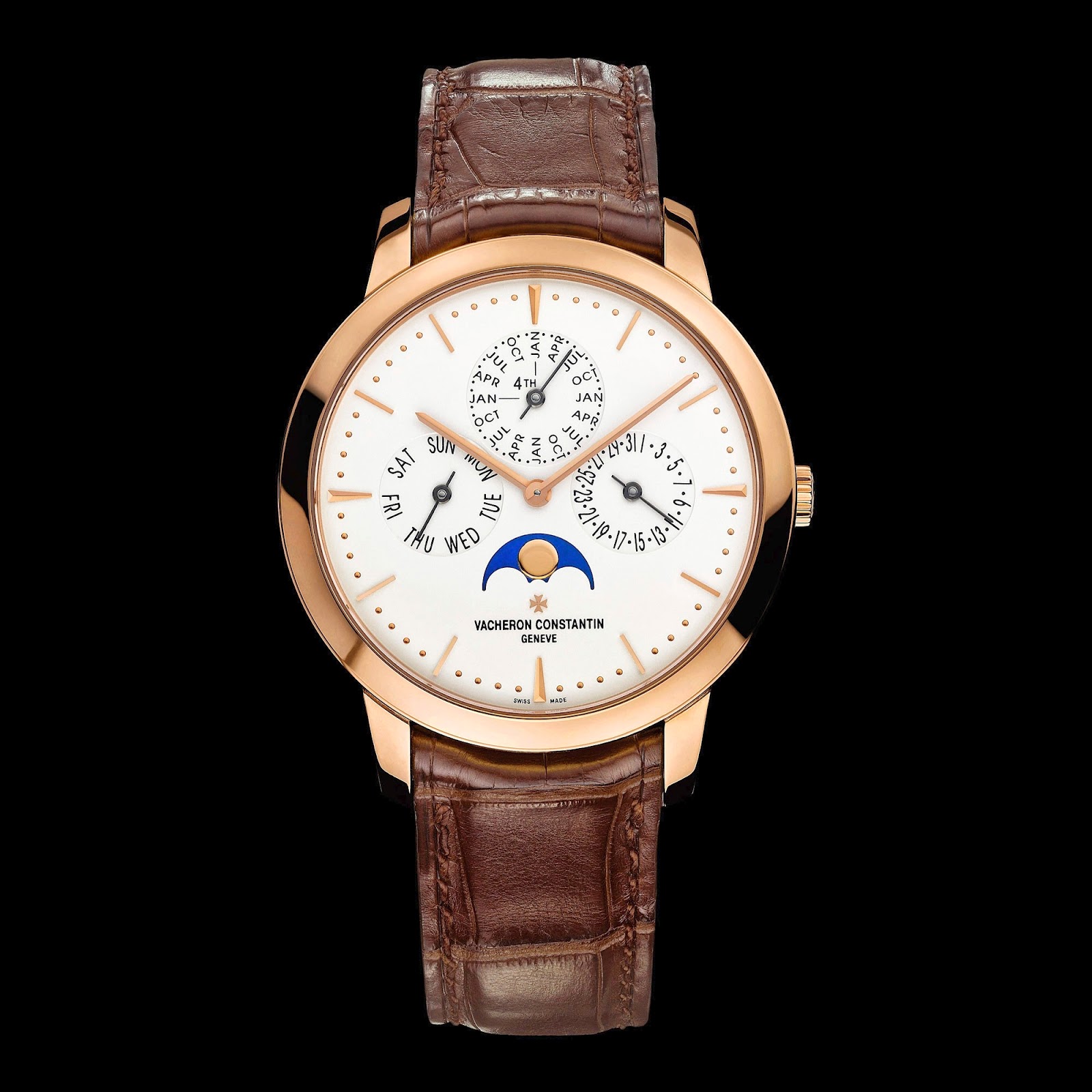
So yes back to the timepieces, I have a deep appreciation for each one, how unique or loud it may be. I have been a really huge fan of classic and vintage designs. I really find "complicated" timepieces such a joy to behold. To me it is like beloved the work of a maestro, just like how a painting is admired. All the complications packed into such a limited amount of space makes it all the more extraordinary. Below is one of these pieces which are among my favourites


                                                                                                        PATRIMONY PERPETUAL CALENDAR


Though for some reason, I recently laid eyes on a limited edition watch from LIP, and am somehow drawn to it. It is the MACH 1871 to be more specific,  this is a really unique timepiece. It is bold, loud and everything I am not usually drawn to. I guess the French have a way to make unconventional seem elegant about it. See the picture below and you will understand what I mean.
                                                                                  
                                                                                         MACH 1871
So when you wear a timepiece on your wrist you are showcasing an art form meant for enjoyment both for your eyes and mine. If at the right place at the right time, someone who understands what you mean may even start a conversation, or pay you a compliment on your timepiece. I have read of stories of how wearing the right timepiece has helped in many situations or even opened up business opportunities for some.
 
So keep on rocking your wrists with any timepiece. Who's to know, it may lead to an open door for you? I am still awaiting my coveted timepiece to adorn, slowly but surely I will work my way up to it.
The saying goes, the pen is mightier than the sword but I beg to differ.
The timepiece is mightier than both, sword and pen. As history itself proves it. We see accounts of famous historical figures having owned fascinating timepieces be it a pocket watch or wrist watch. The likes Napoleon Bonaparte and Pope Pius XI have adorned a Vacheron Constantin just to name a few.
I find it rather remarkable that most famous historical figures are associated with timepieces that they had in their possession. It seems that their timepieces has indeed stood the test of time (pun intended).
 
So with that, The pen may be mightier than the sword, but the timepiece conquers all.

Tuesday, January 6, 2015

So what is Quartz & Mechanical


I have been absorbed into the very fascinating world of Watches.

I can’t seem to have enough of them, these fine timepieces have gotten the better of me.

This year I have been reading up countless pages online on different watch movements and history of certain timepieces. Expanded my knowledge of many more amazing new and vintage brands.

Learning the differences between functions and movements.

I still have so much more to learn and grasp.

The art of watch making is amazing, all the unbelievable kinds of functions in every time piece, each in its own style and each brand having it’s open particular speciality.

Firstly a movement is something like what runs the watch like an engine or heart of the timepiece ( in my own words).

The most basic being either quartz or mechanic.

A quartz movement is an electronic movement. It is called a quartz movement, because a small quartz crystal is integrated into the electronics. This is done as every timekeeping devices needs something constant in which it can measure time against. When current is run through a quartz crystal it will oscillate almost perfectly at a constant frequency. Hence the reason why quartz watches have such an amazing accuracy. The better the quartz, the more accurate time keeping will be to within few seconds a year.

Most quartz watches run on a battery, which can usually last from 2 to 5 years before a replacement is needed. The more basic the watch the longer the battery may last. More complicated movements which may include a compass or stopwatch may result in a shorter battery life.

Mechanical watches seems like a thing of the past in our current day and age. Yet it is an important movement as it may have led to more modern movements. So there may be self-winding or manual winding mechanical or automatic. The technology used in mechnical watches may somewhat be centuries old. This movement is powered by springs that turn gears in which is a regulating mechanism, eventually the hands. Mechanical movements have a range of 50 to 300 parts. This usually depends on the movement. If properly maintained and kept in good care, whose to know how long it may last?

From reading maybe articles, it is said that the jewels used in the movements is a reason that mechanical watches have such longevity.

The most common form of mechanical watches are the automatic. Automatic watches have a rotor that spins on the back of the movement. This turns a gear which winds the main spring in turn working the watch.

Mechanical watches may start simply by keeping time, showing hours, date and stopwatch features to complications such as perpetual calendars alarms and minute repeaters. Such complicated mechanical watches are known to fetch high to exorbitant prices. Watches such as Vacheron Constantin or Philippe Patek.

Just like changing the battery on a quartz watch, for mechanical watches it requires cleaning and maintenance after every few years. For this cost it varies from hundred dollars onwards.

As I have mentioned, I am new and this info is what I have amassed from reading articles and posts online and in books. So I may be wrong in some parts, and I am open to learning more if anyone can help me improve.

Thanks for reading and for anyone new to this hope you have learnt something.


Cheers.

Friday, January 2, 2015

Introduction to my obsession

It was back in 2011, when I stumbled upon an exhibit in our local Museum in Singapore on fine timepieces. It was an exhibit by Vacheron Constantin and my god were the timepieces amazing and nothing short of exquisite. To cut the story short, since then I have been hooked.

The history, the art, the finesse, the immaculate work, the scrutinising detailing, everything I saw was simpliy mind blowing.

Below is the link of some of the gorgeous timepieces I laid eyes on;


I was privileged and blessed enough to be invited to an exclusive closing event by Vacheron Consantin including a private tour for the exhibit and a closing party in Fort Canning Hotel in 2011. The highlight was the night was a private tour with a watch experts who expounded further on each timepiece as we walked past them. Each piece telling a marvellous and intriguing story. From being a famous heirlooms of monarchs and to personal pieces belonging to notable historians. At that very moment, like a fish swimming towards the bait, I was hooked.

Since then, I have been to number of other exhibits available locally. I am constantly trying to grow my understanding on timepieces and chronology. I am still a baby, weaning and am slowly growing my capacity and intellect on the meanings of all the different kinds of watches and movements.

Back then I was a student, having just started working I hope to start a small watch collection and hope to grow it to a decent collection someday.

Who says it's wrong to dream? As I told my wife, it would be a dream to work for any timepiece company out there, to expand my knowledge and grow my fascination and love for timepieces.

Having seen, read and learnt of so many brands around the world, each great and momentous in its own right. I dream to be a proud owner of a Vacheron Constantin timepiece one day, to me it is the Crème de la crème.

Who knows, from my little humble blog, an opportunity may come along. Allowing me to work with timepieces as a living. What a life!


So let's get started! I look forward to more posts and use this page as a means for me to learn and share.